



By Adejumo Kabir and Ola Bello
Elections are a central mechanism through which citizens exercise political choice and determine who governs them. Yet, the quality of democracy cannot be measured simply by whether voting takes place or a winner is declared. Credible elections require citizens to participate freely, candidates to compete fairly, votes to be counted transparently, and elected officials to remain accountable after the polls.
The Osun State governorship election of 15 August 2026 provides an important case study of these challenges. Four years after Ademola Adeleke (then the Peoples’ Democratic Party (PDP) candidate) defeated incumbent Gboyega Oyetola of the All Progressives Congress (APC) by 28,344 votes in 2022, and Adeleke secured a second term, this time on the platform of the Accord Party. He polled 511,067 votes against 444,815 for the APC’s Bola Oyebamiji, winning 19 of the state’s 30 local government areas. His winning margin of 66,252 votes was more than twice the 2022 margin.
Governor Adeleke’s votes rose by more than 107,000 from 2022, while the APC candidate also secured substantially more votes than Oyetola did four years earlier. This points to a more complex electoral landscape involving increased mobilisation, a larger electorate and changing patterns of voter preference rather than a simple collapse of opposition support.
Related Posts:
- FULL TEXT: Dapo Olorunyomi’s lecture at Ajayi Crowther University on Nigerian journalism
- WASSCE 2026: 1.2m candidates secure required credits as performance drops
- OsunDecides2026: Beyond sporadic gunshots, naira rains freely
- Osun 2026: Safeguarding the democratic space amid rising political violence
As the last off-cycle governorship election before Nigeria’s 2027 general elections, the Osun election offers an opportunity to assess whether Nigeria’s electoral system is becoming more resilient to traditional forms of manipulation, while identifying the forms of influence that continue to threaten the freedom and integrity of the vote.
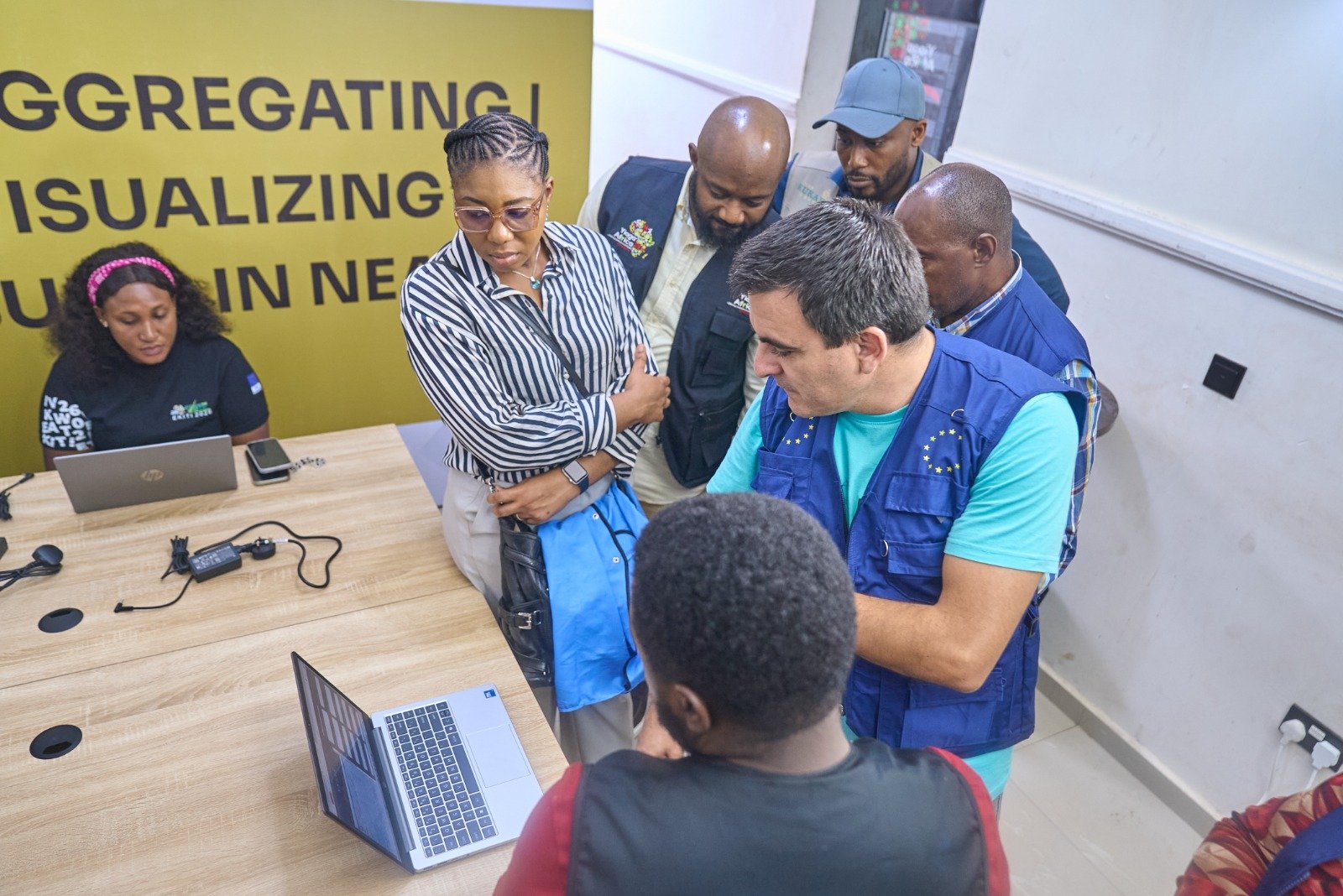
EU Election Monitoring Situation Room
From pre-election tensions to election-day resilience
In the months preceding the poll, political actors and supporters traded allegations of violence, intimidation, destruction of campaign materials, and the activities of political thugs. Kimpact Development Initiative (KDI) reported 44 election-related violent incidents resulting in 13 deaths between October 2025 and June 2026, alongside injuries, property destruction, and growing fear among residents. Notably, 26 of those incidents occurred in May and June alone, indicating an escalation as the election approached.
The security concerns were serious enough for the Independent National Electoral Commission (INEC) to conduct a state-wide risk assessment. The Commission identified 385 potential flashpoints and about 200 difficult terrains across the state’s 30 local government areas and shared the assessment with security agencies to guide operational planning.
By the first week of August, the threat extended to electoral institutions themselves following an attack on an INEC Permanent Voter Card distribution centre in Odo-Otin Local Government Area, forcing electoral officials to flee. Such incidents demonstrated that the threat to electoral integrity extended beyond clashes between political supporters to include the protection of election personnel and infrastructure.
However, events on election day demonstrated the capacity of security intervention and citizen vigilance to preserve democratic space when threats emerged. Good Governance Africa (GGA) Nigeria field observations provided a direct example. In Ogo-Oluwa, Osogbo, GGA observers witnessed police officers confront and repel armed individuals attempting to disrupt voting. The intervention prevented the situation from escalating and enabled the voting process to continue.
Across locations observed by GGA, voters remained at polling units despite the tense political environment and resisted attempts to disrupt the process. This demonstrates an often-overlooked dimension of electoral resilience. Security agencies may provide physical protection, but democratic space is also sustained by citizens who insist on exercising their rights.
The protection of the electoral process, however, cannot end when voting closes. On election night, gunmen attacked a collation centre in Osogbo and fired into the air, temporarily disrupting the collation process before security personnel brought the situation under control. The incident reinforces an important lesson that electoral security must protect the entire process, from voters and polling units to the movement of materials, collation centres, and final declaration of results.
While security agencies deserve commendation where their personnel acted promptly and professionally, this must coexist with accountability. Allegations of excessive force, selective enforcement, intimidation, or failure to act should be independently investigated.
The increasing use of biometric accreditation through the Bimodal Voter Accreditation System (BVAS), electronic results management, polling-unit result documentation, citizen observation, and real-time reporting has also all increased scrutiny of the electoral process.
GGA observed that the technology deployed strengthened transparency because it is more difficult to alter a properly accredited and documented vote after it has been cast. Technology, however, is not a complete solution. There were reports of BVAS-related delays, demonstrating the importance of reliable infrastructure, adequate training, and effective technical support. Moreover, voters can still be influenced before and during voting through money and political pressure.
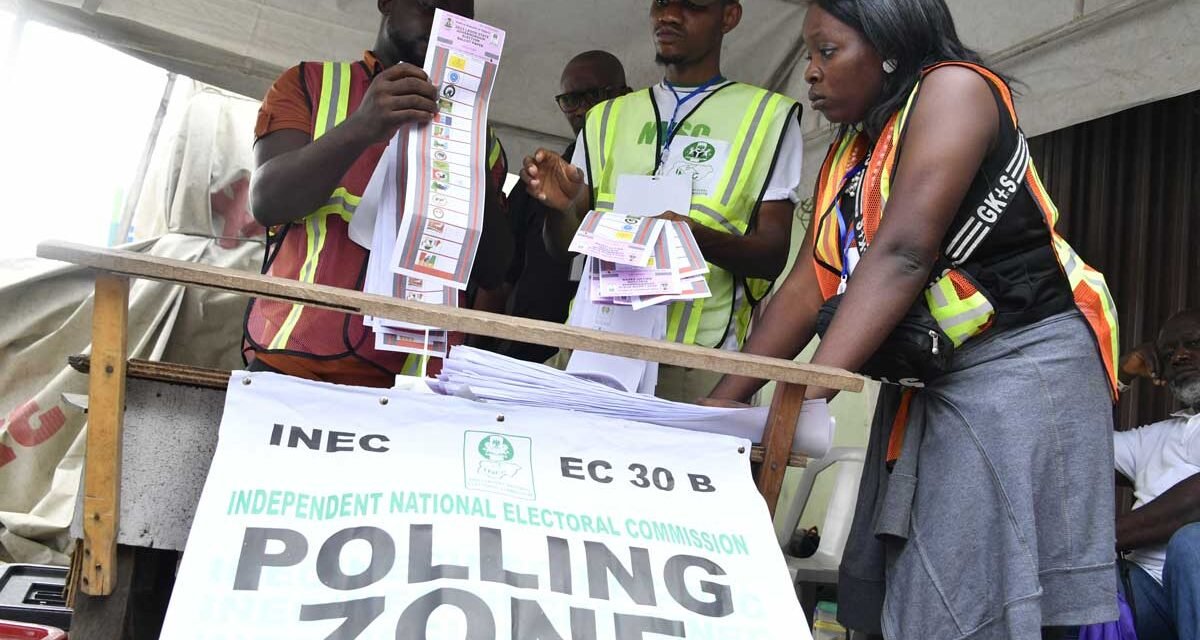
INEC Officials asking political parties’ agents to sign after the completion of voting exercise at a polling unit on August 15 2026.
More voters, but not necessarily deeper participation
The 2026 results provide important evidence of changing voter behaviour, with more Osun residents participating in the election than in 2022. The number of registered voters increased from roughly 1.9 million in 2022 to about 2.3 million in 2026. Accredited voters also rose substantially, from about 827,000 to more than 1 million. However, the accreditation rate increased only marginally, from roughly 42.2 per cent in 2022 to 43.2 per cent in 2026.
The increase in accredited voters is encouraging, but GGA’s field observations suggest that higher participation should be interpreted with some caution. Several residents interviewed a week before the election and on election day indicated that financial inducements were among the factors motivating some people to participate. In some communities, residents described political actors moving beyond rallies and polling units to distribute money and other benefits directly to voters and households.
More people may have turned out, but not all participation was necessarily driven by political conviction, policy preference, or civic responsibility. The expansion of the registered electorate increased political mobilisation, while other factors undoubtedly contributed to the higher number of accredited voters. However, the accounts gathered by GGA indicate that inducement was one of the factors influencing participation, and this deserves closer examination.
Vote-buying and the politics of inducement
Vote-buying is not new to Nigerian elections. What appears to be changing, however, is its timing, organisation, and reach. GGA’s fieldwork found evidence of an increasingly transactional campaign environment.
A commercial motorcyclist interviewed in Osogbo before election day said he received ₦15,000 from two different political parties after presenting his voter card. “They are giving money around, and everybody knows it. I got ₦15,000 from two different parties. Once we show them our voter’s card, we get paid,” he said.
A trader interviewed in Iragbiji offered a different perspective, highlighting the economic pressures that make such inducements difficult for some voters to reject. “Things are difficult now. If somebody comes and gives you money, it is difficult to tell the person no. But what we really want is a government that will make life easier,” she said.
Her account captures an important dimension of vote-buying that is often missing from public debates. For citizens struggling to meet basic needs, an election-period payment may provide immediate relief and, as some GGA interviewees suggested, may also encourage participation in the electoral process.
Some residents interviewed by GGA suggested that they accepted inducements not because they had changed their preferred candidates, but because they considered the payments an opportunity to benefit from politicians’ spending during the election. One resident summarised the attitude as: “collect the money but still vote for who you want.”
When political competition becomes heavily dependent on financial inducement, candidates with greater resources gain an advantage, the cost of political competition rises, and elections risk becoming contests of spending power rather than competing visions of governance. This can also foster a political culture in which citizens are mobilised through immediate material benefits rather than sustained engagement with policies and programmes.
The deeper concern is therefore not simply whether a particular voter sells their vote. Rather, it is whether Nigeria is developing an electoral system in which political actors can purchase access to economically vulnerable citizens, influence participation, and potentially shape political choices, while leaving unchanged the structural conditions that make such inducements attractive.
Police officers monitoring the election.
The local campaigners
Another striking observation from GGA’s visit to Osun was the intensity of grassroots political mobilisation in the final days of the governorship campaign. Away from major rallies and campaign events, local campaigners took the contest directly into neighbourhoods, moving from house to house and engaging residents individually.
In several communities, campaigners were observed moving through neighbourhoods after dark, canvassing support, encouraging residents to vote, and reminding family members to bring out their voter cards. Their activities showed how much electoral mobilisation still depends on local networks, personal relationships, and community-level organisers, despite the growing importance of social media and digital campaigning.
These local campaigners often operate below the visibility of party leadership. They are the people who know the streets, families, and communities, and can reach voters who may never attend a major political rally. Their role becomes particularly important in the final hours of a campaign, when political competition shifts from broad public messaging to direct efforts to get individual voters to the polls.
While much attention is given to digital campaigns and online political engagement, the final battle for votes is still being fought at the community level. For GGA, this grassroots mobilisation deserves further study, particularly its relationship with voter turnout, party organisation, participation, vote-buying, and the influence of informal community networks on electoral behaviour.
What next for Osun?
With Governor Adeleke receiving a renewed mandate, the focus must now shift from electoral competition to governance and accountability. The legitimacy of that mandate will be measured by his administration’s ability to translate campaign promises into tangible improvements in the lives of Osun residents.
The post-election period should therefore bring sustained scrutiny of the government’s campaign commitments, budget implementation, public procurement, education, healthcare, infrastructure, employment, local government administration, transparency, and public financial management.
Civil society organisations and the media should develop measurable indicators against which the administration’s performance can be assessed throughout its second term. The objective should be to move from episodic election monitoring to continuous governance monitoring.
The President has also urged Governor Adeleke to use his renewed mandate to unite the state and accelerate socio-economic development. This provides an additional basis for citizens, civil society, and the media to monitor whether the administration delivers on its commitments.
Accord party supporters celebrating after INEC declares Governor Ademola Adeleke as the winner.
Lessons for Nigeria’s 2027 elections
The Osun election offers several lessons for Nigeria’s 2027 elections, particularly on how to protect electoral integrity while addressing forms of manipulation that increasingly occur outside the ballot box.
While BVAS, electronic results management, polling-unit result documentation, and citizen observation should continue to be strengthened, INEC’s early risk assessments must be matched by targeted security deployment, stronger inter-agency coordination, and effective rapid-response mechanisms in areas identified as vulnerable to violence or electoral disruption ahead of the 2027 elections.
Anti-corruption and law-enforcement agencies should also investigate credible allegations of vote-buying, illegal electoral financing, and organised voter inducement. Monitoring should cover campaign-related financial transactions, political networks, community-level mobilisation, and emerging digital forms of inducement. Enforcement should be evidence-based, timely and politically neutral, targeting not only voters who receive inducements, but also the political actors, financiers, and intermediaries who organise and fund them. At the same time, voter education should address the causes as well as the illegality of inducement, helping citizens to understand how transactional politics can affect governance after elections.
Political parties, too, should bear greater responsibility for the conduct of their candidates, agents, and supporters.
Finally, civil society organisations should extend election monitoring into sustained governance monitoring. The Osun election should not be judged solely by who won or by whether voting was largely peaceful. Its deeper significance lies in what it reveals about the changing character of Nigeria’s electoral democracy.
Nigeria’s challenge ahead of 2027 is to protect the voter before, during, and after voting, while ensuring that the mandate produced at the ballot box translates into accountable, responsive and measurable governance.
…………………………….
Adejumo Kabir Adeniyi is a senior researcher at Good Governance Africa-Nigeria.
……………………
Oladiran (Ola) Bello is an Executive Director at Good Govvernance Africa-Nigeria.
Source: Development Reporting